July 23, 2026
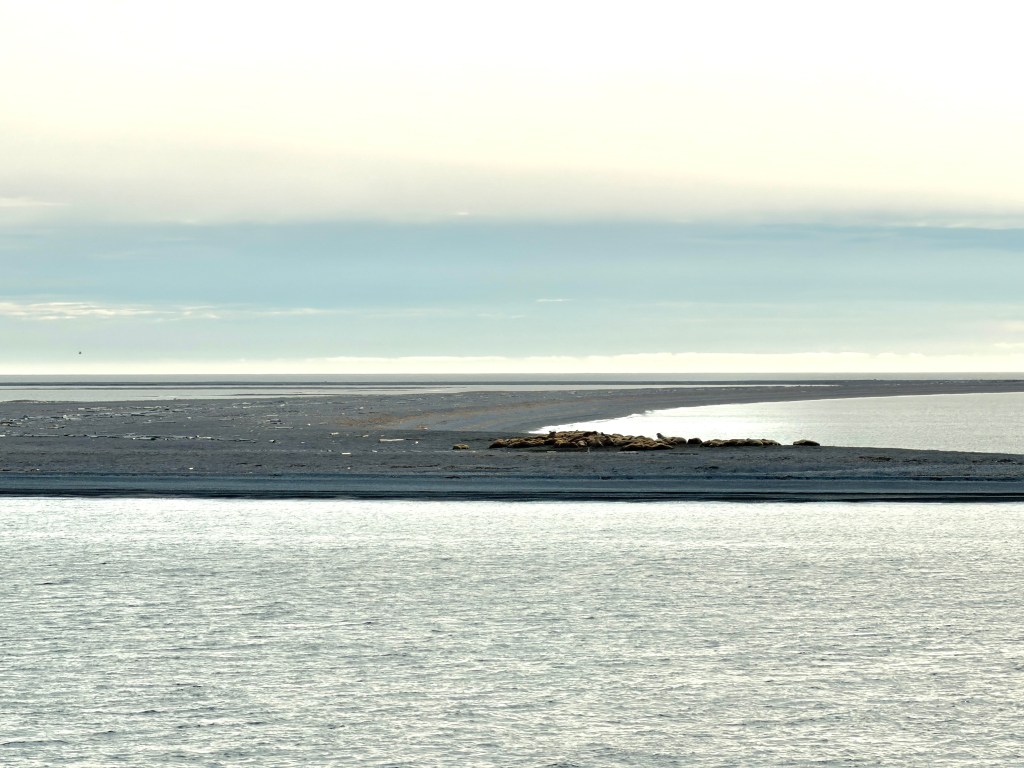
The captain came on the ship’s PA this morning at 5:00am with an announcement that we were approaching Moffin Island. At 80 degrees north, this sliver of sand sitting 6 feet above sea level is home to one of the largest known walrus haul outs. Sometimes, up to thousands of these giants crowd the beach. Today’s gathering was modest by those standards, but it was still entertaining to watch them moving about the beach like corpulent earthworms and arcing up, tusks backlit in the morning sun.
Up that early, I had plenty of time to reflect on yesterday’s adventures.
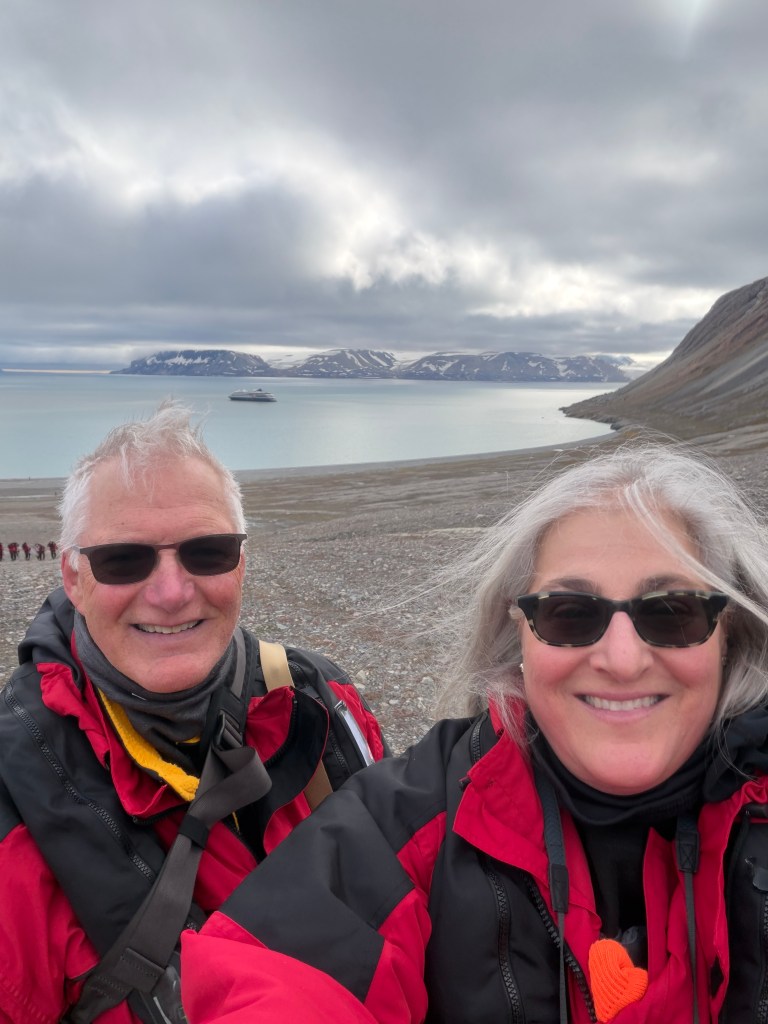
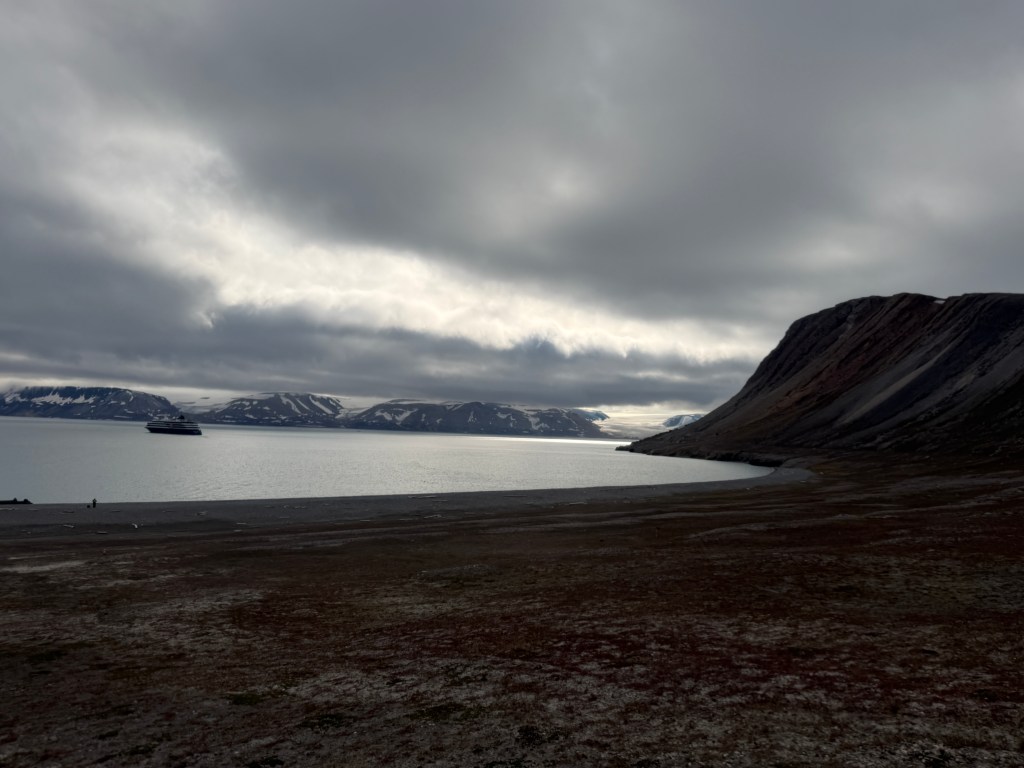
Our first stop was De Geerbukta, a remote bay set amongst 600 million year old mountains, tinged purple and red with iron ore. Glaciers glinted in the distance and our ship rode at anchor, dwarfed by the scene.
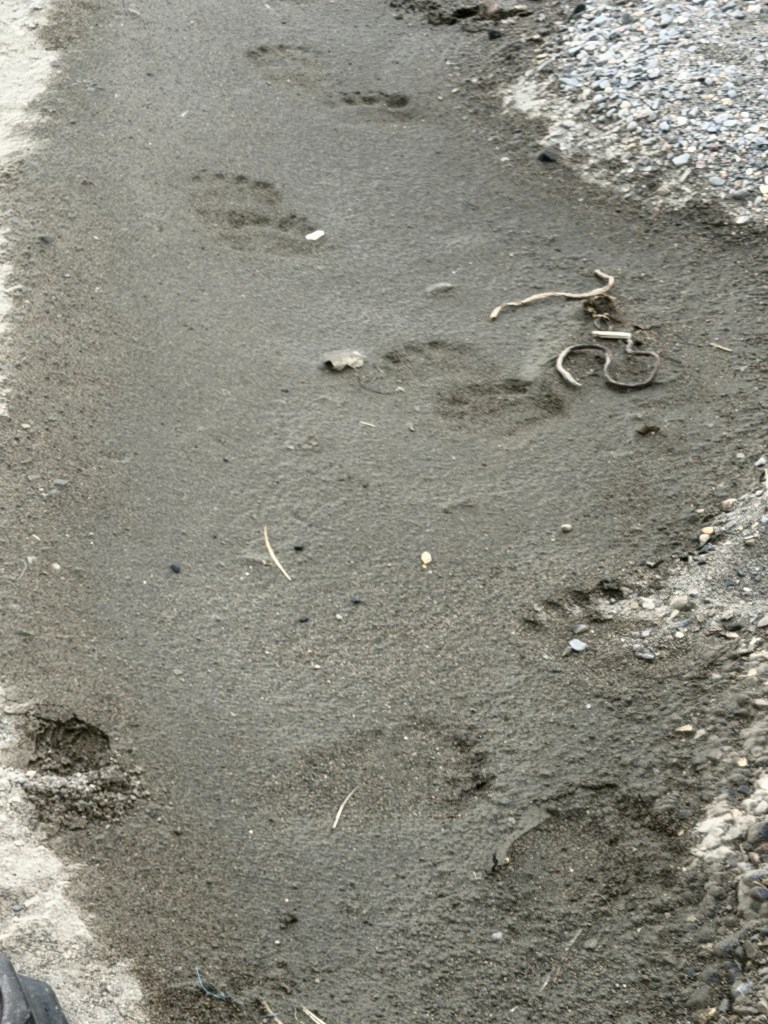
Polar bear, goose and reindeer tracks littered the beach, and fox scat was found in abundance, evidence of an active life despite the barren setting.
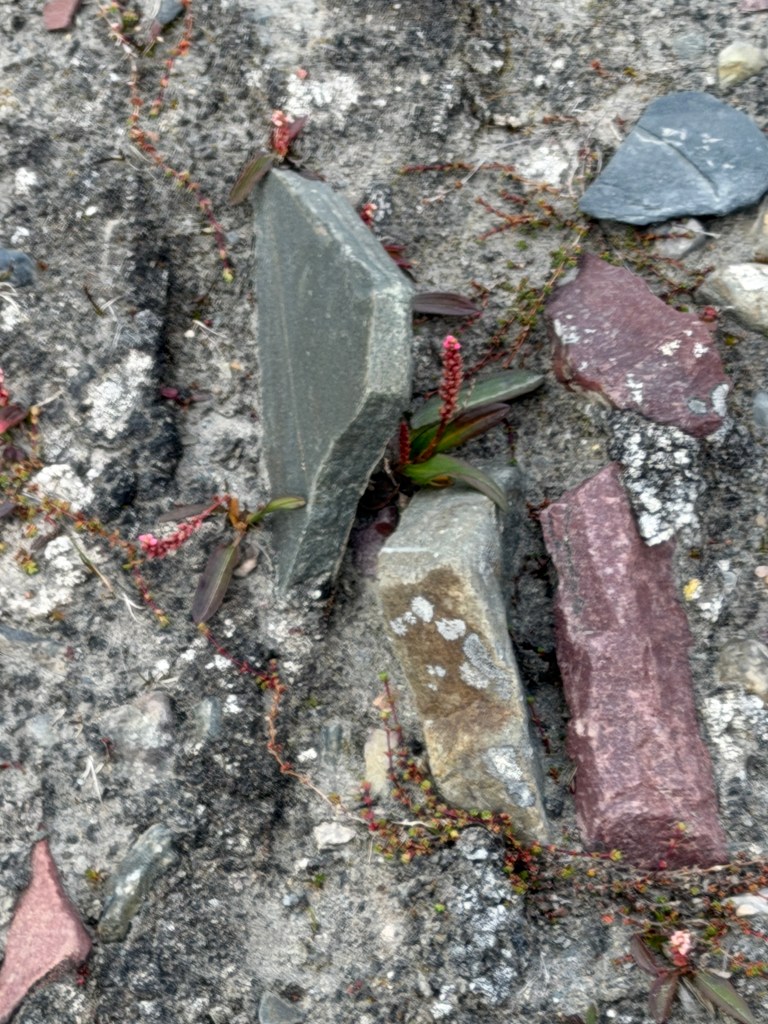
The delicacy of the tundra up close again surprises, with life taking advantage of every protected crack and crevice.
Back aboard and en route to our next setting, we were alerted to a whale off our starboard bow. Looking off our balcony I could see two spouts in the distance, but nothing more. Returning with my binoculars, I was just in time to catch sight of a shiny grey back breaking the surface about 100 yards away and coming directly towards us. As I watched, the back continued to arc, becoming broader and broader. It felt like I watched that enormous back for 30 seconds before it again narrowed and disappeared, and I thought “wow, that’s the biggest whale I’ve ever seen!” And, in fact, it was.
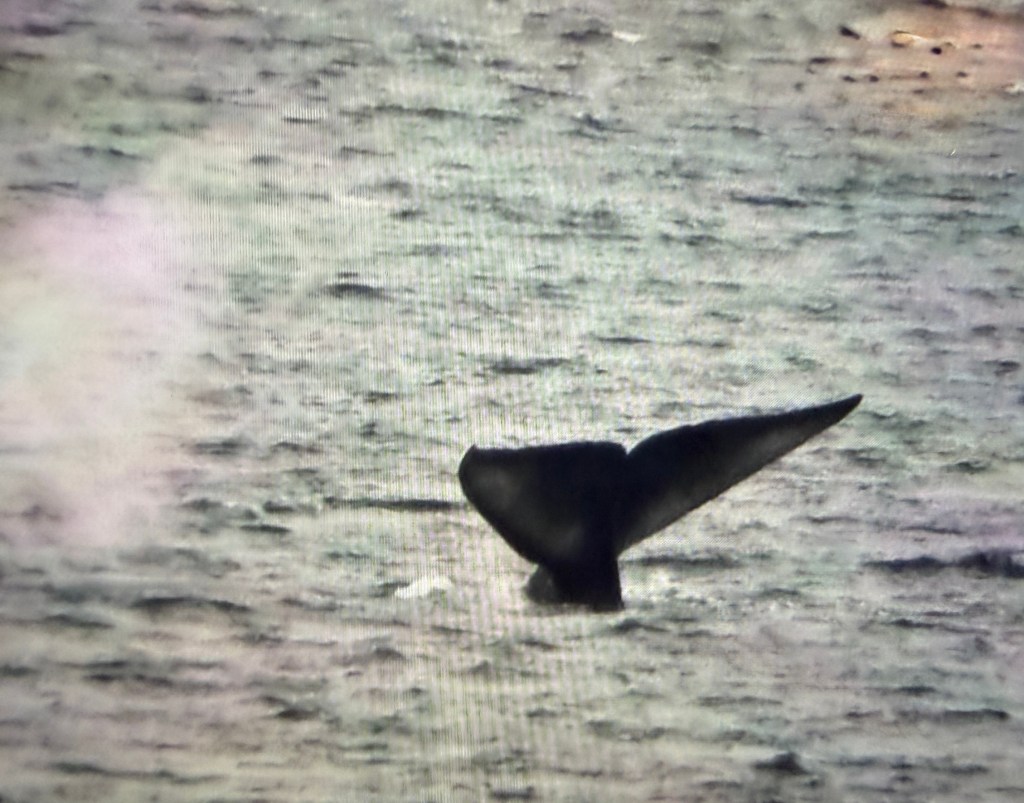
Two blue whales, a mother and calf, crossed the bow of our boat to an a chorus of “oohs and ahhs” from appreciative onlookers. I got no photos, just enjoyed the experience, and Erich hasn’t yet processed the hundreds he took, so a single photo of a blue whale tail taken from the viewing screen of his camera will have to suffice as evidence that we were witness to the largest mammal on earth.
Our ship paused for about an hour watching the show, and we saw spouts in the distance of what we were told were fin whales, though I’ll have to take the naturalist’s word for that. We are told this was a very unusual sighting, as whales are not often seen on Svalbard cruises, and it was only the second time our expedition leader, with 20 years of experience, had seen a blue whale.
Our next stop brought us back down to earth, and man’s attempts to understand and tame it. The International Geophysical Year Research Station sits on lonely windswept tundra beside the natural harbor of Kinnvika.
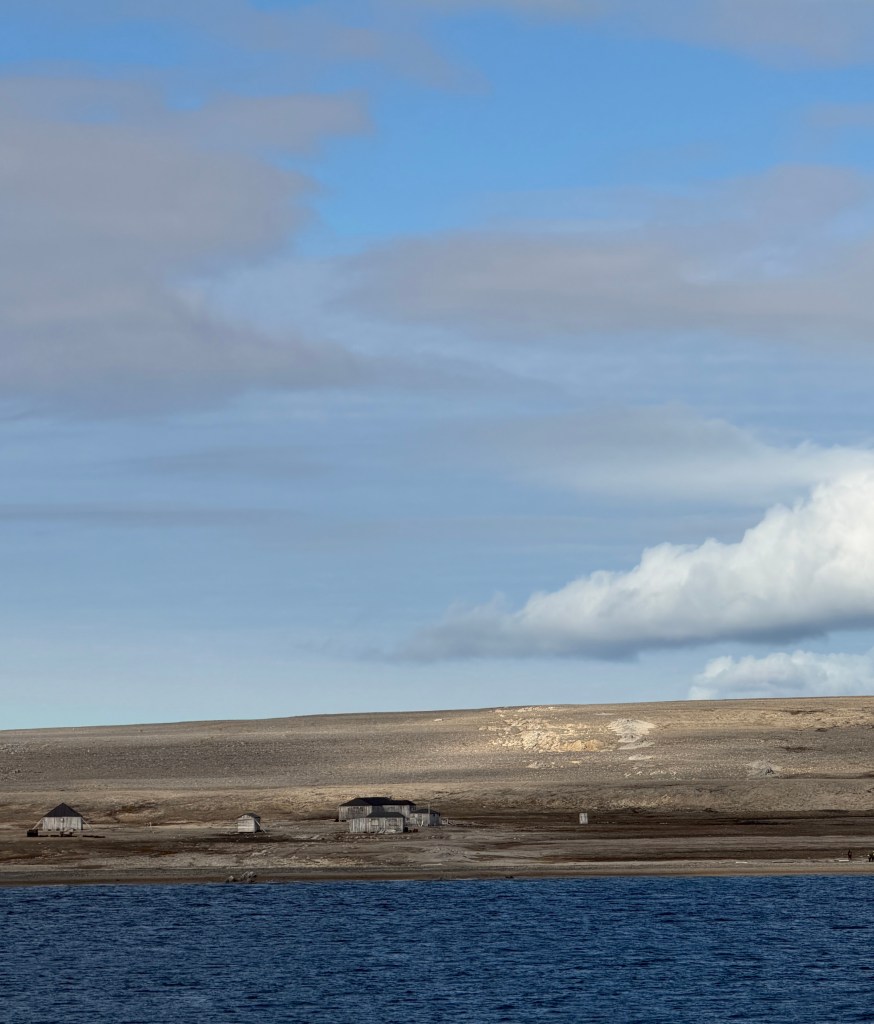
Established in 1957 by a Finnish/Swedish cooperative, researchers lived here year round until 1966 studying the polar ecosystem.
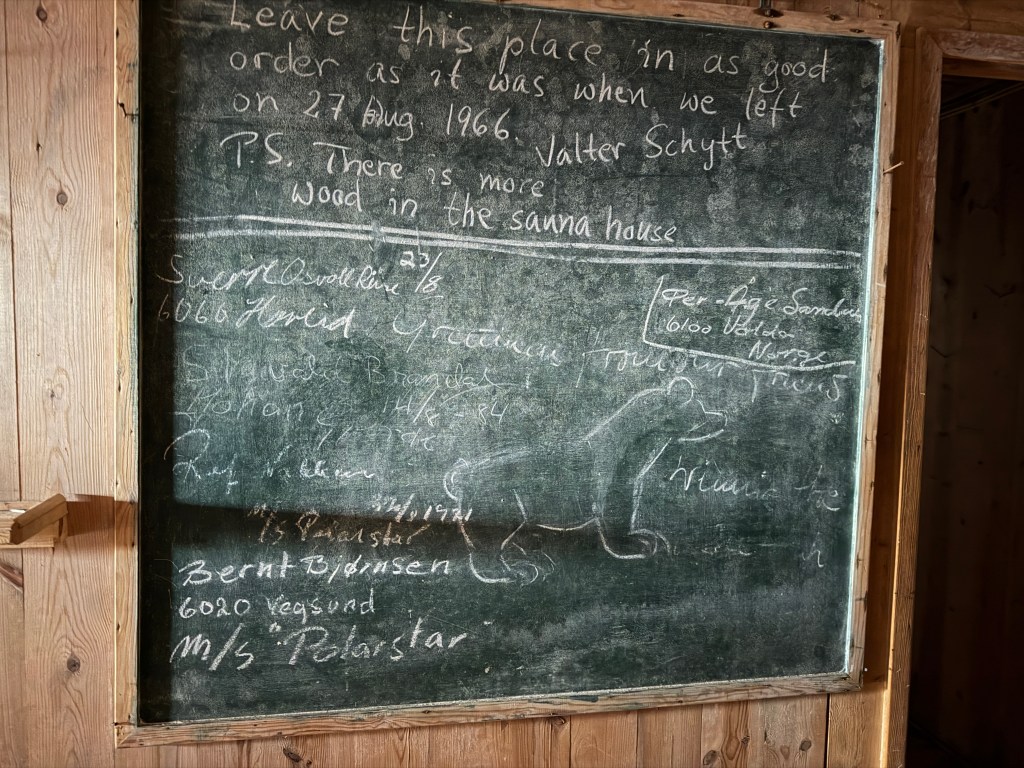
I couldn’t begin to imagine the lonely winters here, weathered, wooden buildings separated by vast distances in case of fire.
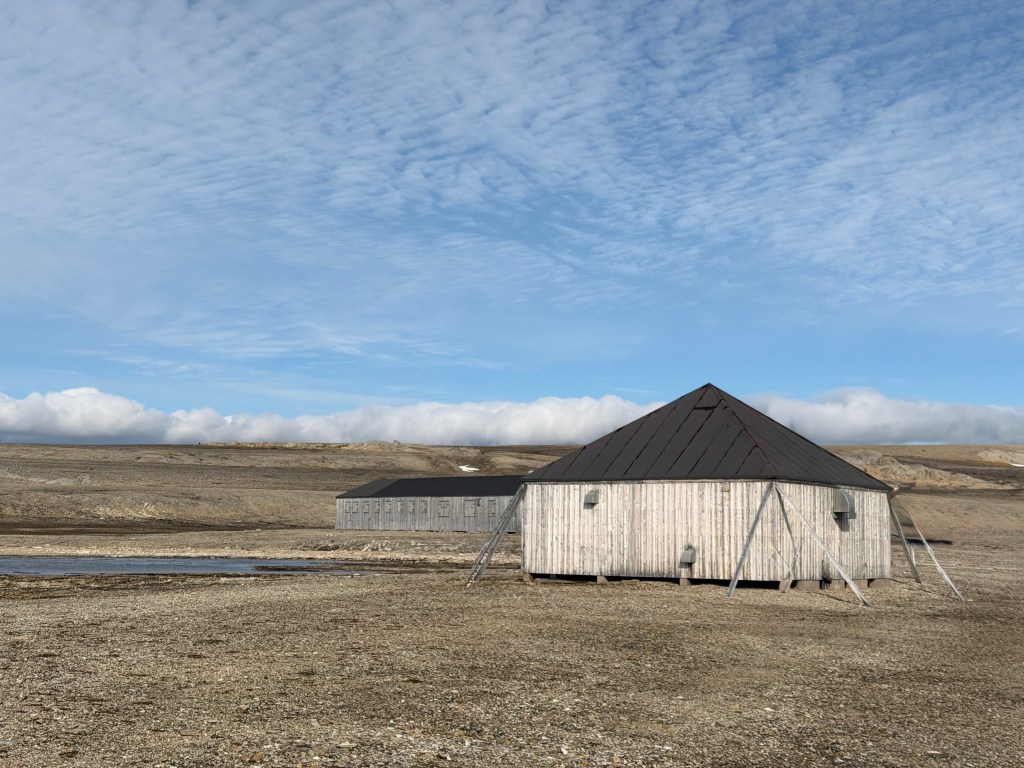
Our guides stalked about the hills behind the station with their guns in case of polar bear, graceful arctic terns dove for food in the harbor, and we small, colorfully-colored tourists walked about the remote site in wonder, humbled, for the umpteenth time, before nature.
 bertiewouldgo
Leave a comment